
I’m going to share several pregen characters made using the GURPS-O-SCOPIC sheet. These pregens should work just fine for your own one-shots as described in the Horror roadmap! However, since I made these characters at different times, I tried a few different techniques and they are not all 100% consistent.
It’s pretty minor stuff that you can ignore if you want, but if you are curious about the fine details let me explain what happened:
Assumed/Allowed Advantages
As the games went on, it became clear that Sense of Duty (Companions) [-5] should be required for all characters in the game, so I took it OFF the later character sheets because everyone had it. So sometimes it’s there and sometimes it isn’t but we agreed it is always in play.
As we played it also became clear that the overall organization uniting the players was that they were all members of S.P.E.C.T.R., the Society for Paranormal Extraterrestrial Cryptozoological Transmetaphysical Research. So this is available as a source of extra points for any character (e.g., as a Duty, a source of Allies, Favors, or Contacts).
The majority of the pregens are mundane, but I also one supernatural trait with the idea that at most one big “supernatural thing” could be going on with one player-character. So these should have from zero to one supernatural trait.
There is no “campaign setting” per se other than a series of Horror one-shots all set in the 1980s (see the roadmap), but since each adventure is somewhat different about what it assumes, I would allow pretty much anything if a player wanted to do that. E.g., Psionics… fine. Magic… fine. Powers… okay, you can have one. Supernatural undead things? Sure. etc.
Point Totals
I am also using Mook’s idea from Quick Start Character Creation that the point totals of these characters don’t have to be exact. For the purposes of speed and simplicity, Mook recommends the character point total should be interpreted as a range that is +/- 10%. So these are 125 point characters who could actually end up 112-138 points and that’s fine.
About the Notation
These characters were made with GCA 5 — so there is a complete standard GURPS character sheet for each pregen that has been produced by GCA 5. Then, I copied and pasted traits to the GURPS-O-SCOPE simplified character sheet. Occasionally I changed the names of some traits (sorry!) to match the conversations I had with people playing the characters. But generally it should make sense.
I tried moving combat skills over to the combat block (and deleting them from the skills block). Then I tried deleting combat skills entirely. So it might not say “Brawling” or “Boxing” or “Guns (Pistol)” anywhere on the simplified character sheet, it would just list the actual attacks (Punch, Bite, Kick, Revolver).
The upshot: I think this works well for new players. I would definitely do this in the future. The damage bonuses for the deleted skills (e.g., Brawling or Boxing) are still in the stat block. The GM has to remember that the underlying skills exist, I guess, or consult the complete character sheet.
However, I figured all of this out as I went along so the placement of the combat skills and the format is a little inconsistent. Still, the pregen GURPS-O-SCOPIC character sheet should work just fine for your own one-shots as described in the roadmap!
IMAGE CODA:
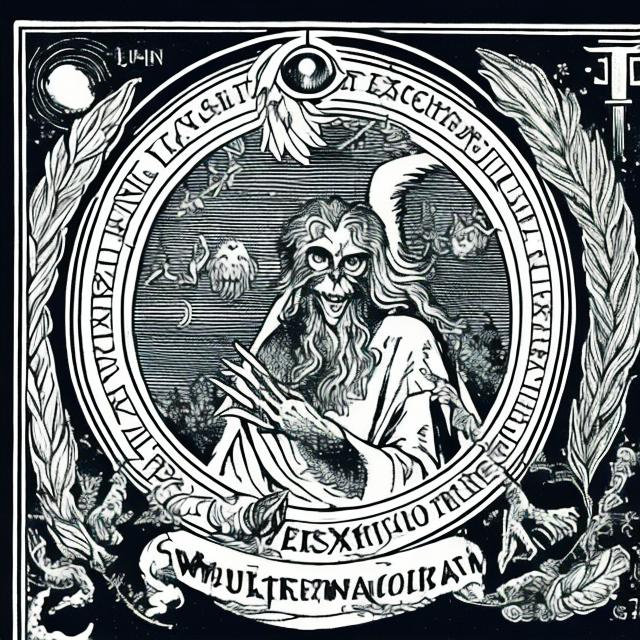
This imaginary logo for the S.P.E.C.T.R. organization was created with OpenAI using the prompt: “A color line drawing of the corporate logo for the Society for Paranormal Extraterrestrial Cryptozoological Transmetaphysical Research including a ghost, a wolfman, an all-seeing eye, surrounding by a laurel wreath.” And the negative prompt “Photorealistic.” It used OpenArt Creative DPM++ SDE Karras.


This is a really thoughtful breakdown of pregen design for one-shots. The insight about treating point totals as a range rather than an exact number is practical, and the note on cutting combat skills from the simplified sheet while keeping the damage bonuses in the stat block is a smart usability tradeoff for new players.
If anyone here also plays with character life stages the way we track pregens, I’ve found Lifepurr useful for quick age and growth estimates. It’s a free toolkit with four calculators—cat age, kitten age, pregnancy, and growth—handy for building age-appropriate NPCs or familiars without guesswork.
LikeLike
This is a fantastic breakdown of pregen character design for horror one-shots. The transparent look at how things evolved over time—like the shifting placement of Sense of Duty or combat skills—is useful for anyone running GURPS-O-SCOPIC sessions. For players aiming for top university programmes, though, building a coherent personal statement or research proposal follows a similar logic: every detail needs to support one overarching narrative. If you’re navigating Oxford, Cambridge, Imperial, LSE, or UCL applications, G5 Admissions helps you align each piece of your application the same way, around a single, sharp admissions strategy.
LikeLike
If you’re applying for a Fulbright, the written materials and interview often matter as much as your grades. I found a useful resource for organizing all your documents—study objectives, personal statements, short answers, and recommendations—from one saved profile. It also lets you check reviewer risk, package consistency, and interview defensibility before committing credits. Worth a look if you want your application to hold up under committee review: Fulbright Prep
LikeLike
This is a helpful breakdown of the pregen characters, especially the notes on point total flexibility and the S.P.E.C.T.R. organization as a unifying hook. For anyone building character sheets or handouts for a one-shot, having clean visual assets really helps keep the table focused. I’ve been using PicBGRemover to quickly cut out character portraits and logos on my own device, no uploads required, and it produces transparent PNGs in seconds. Makes prepping layouts for GURPS-O-SCOPIC sheets much smoother.
LikeLike
This breakdown of pregen character design is a solid read for anyone running one-shots, especially the point-range flexibility and the “zero to one supernatural trait” guideline—keeps things simple without killing creativity. I like that the combat skills get folded into stat blocks for new players; fewer moving parts always helps at the table. If you’re into co-op chaos with a lighter touch, check out what we’ve been covering at Dear Passengers Games, where the whole game is about turning routine trips into physics-powered disasters.
LikeLike
This breakdown of pregen character consistency is really useful — the honest note about traits appearing on some sheets and not others, and the reasoning behind it, is the kind of detail most designers would quietly leave out. The point-total-as-a-range approach and moving combat skills into the attack block both strike me as smart simplifications for new players.
I’ve been working on something similar for a different niche: collecting test recalls and cross-checking them until they rebuild into full, sittable practice tests with recreated audio, complete answer keys, and dates matched to the exam month. The verification-against-each-other part is the whole game. If you want to see how that plays out:
IELTS Actual Tests
LikeLike
This is a helpful behind-the-scenes look at how pregens evolve across a series of one-shots. The note about point totals being a ±10% range instead of exact numbers is a smart, practical call for convention play, and moving combat skills off the simplified sheet while keeping the damage bonuses in the stat block seems like a good compromise for new players. Anyone prepping structured, question-driven material might find a similar approach useful on CheveningPrep, where the focus is on checking how well each answer addresses the prompt and whether the pieces fit together before you revise.
LikeLike
Having helped students prep for competitive business programmes, I know how much programme-specific guidance matters. ImperialApply offers exactly that for Imperial Business School—writing feedback, interview question banks, and six-question mock interviews, all in one workspace for your Career Planning, PS1, and PS2 answers. If you’re serious about your application, having structured practice and feedback like this makes a real difference. Worth checking out: https://imperialapply.com/
LikeLike
If you run tabletop one-shots, pregens are only half the prep — handouts and character sheets still need to come out right. I keep a browser tab open for quick utility stuff, and printmytestpage.com has been handy before a session: free, printer-agnostic test pages, no sign-up or software, nothing blocking the print button. Takes seconds to check ink levels, alignment, and nozzle health, so your sheets and reference pages don’t print crooked. Worth bookmarking alongside your GM toolkit.
LikeLike
Great breakdown of pregen character consistency—the point range flexibility and simplified combat block approach make a lot of sense for one-shots. For anyone who also enjoys exploring lightweight, prompt-driven experiences between sessions, there are browser-based AI adventures at GameWren that are free to try and require no setup—handy when you want a quick interactive story without prepping a full character sheet.
LikeLike
This is a helpful overview of the pregen character assets and the reasoning behind the S.P.E.C.T.R. setup. I like the emphasis on giving new players tools like the GURPS-O-SCOPIC sheet to keep things approachable, and the point range idea sounds like a practical way to avoid unnecessary friction at the table.
LikeLike
This looks like a fun resource for GURPS one-shots — pregens are always handy for getting a new group to the table fast, and the notes on the occasional inconsistency are refreshingly honest. For anyone prepping one-shots, having compact stats on a single page makes a real difference. I’ve come across similar practical, ready-to-use material at A Level past papers — their formula booklets and grade boundaries are just as handy for quick reference. Worth a look!
LikeLike
For anyone prepping for the TMUA or ESAT, the official past papers are essential but the free archives can be hard to track down. SummitPapers gathers the official UAT-UK archives for the TMUA, ESAT and TARA in one place, along with the older papers still recommended to candidates. The questions belong to UAT-UK, while the worked explanations and extra practice questions are their own. It’s a straightforward starting point if you want authentic materials with some added guidance. Worth a look before your next practice session: SummitPapers
LikeLike
Speaking of tightening up drafts, the consistency notes here remind me of a tool worth bookmarking: personalstatementchecker.com pastes your personal statement once and instantly flags clichés, unsupported claims, repetition and length, no sign-up needed. It’s a handy second pair of eyes, much like a pregen review before a one-shot.
LikeLike
This breakdown of pregen character consistency is genuinely useful—the +/- 10% point range and the “zero to one supernatural trait” guideline are smart ways to keep one-shots flexible without bogging down character creation. It reminds me how much good design comes down to clear, simple constraints. On a related note, if you’re interested in quick, self-contained tools that reveal something about how people connect, this free love language test is worth a look: takelovelanguagetest.com. Twenty scenario-based questions, no sign-up, and it maps results across all five love languages—handy for character dynamics or just for fun.
LikeLike
This post is a helpful behind-the-scenes look at pregen design for one-shots. The note about treating point totals as a range rather than an exact number is a sensible approach for keeping character creation quick. I also appreciate the tip about stripping combat skills from the simplified sheet but keeping the damage bonuses in the stat block. For anyone who enjoys these structured, scored checklists, there’s a similar format over at Rice Purity Test — a straightforward 100-item list with transparent scoring and a neutral category breakdown.
LikeLike
For anyone running GURPS horror one-shots, this pregen breakdown is genuinely useful—especially the note about combat skills being folded into attack entries for new players. That kind of streamlining matters when you’re onboarding people mid-session. If you’re prepping a campaign with type-based creatures or want a quick reference for matchup logic before building encounters, typeweakness.com is a handy lookup tool for weaknesses, resistances, and immunities. Pick a type or search by name and get the full chart instantly—no fluff. Worth bookmarking alongside your GM screen.
LikeLike